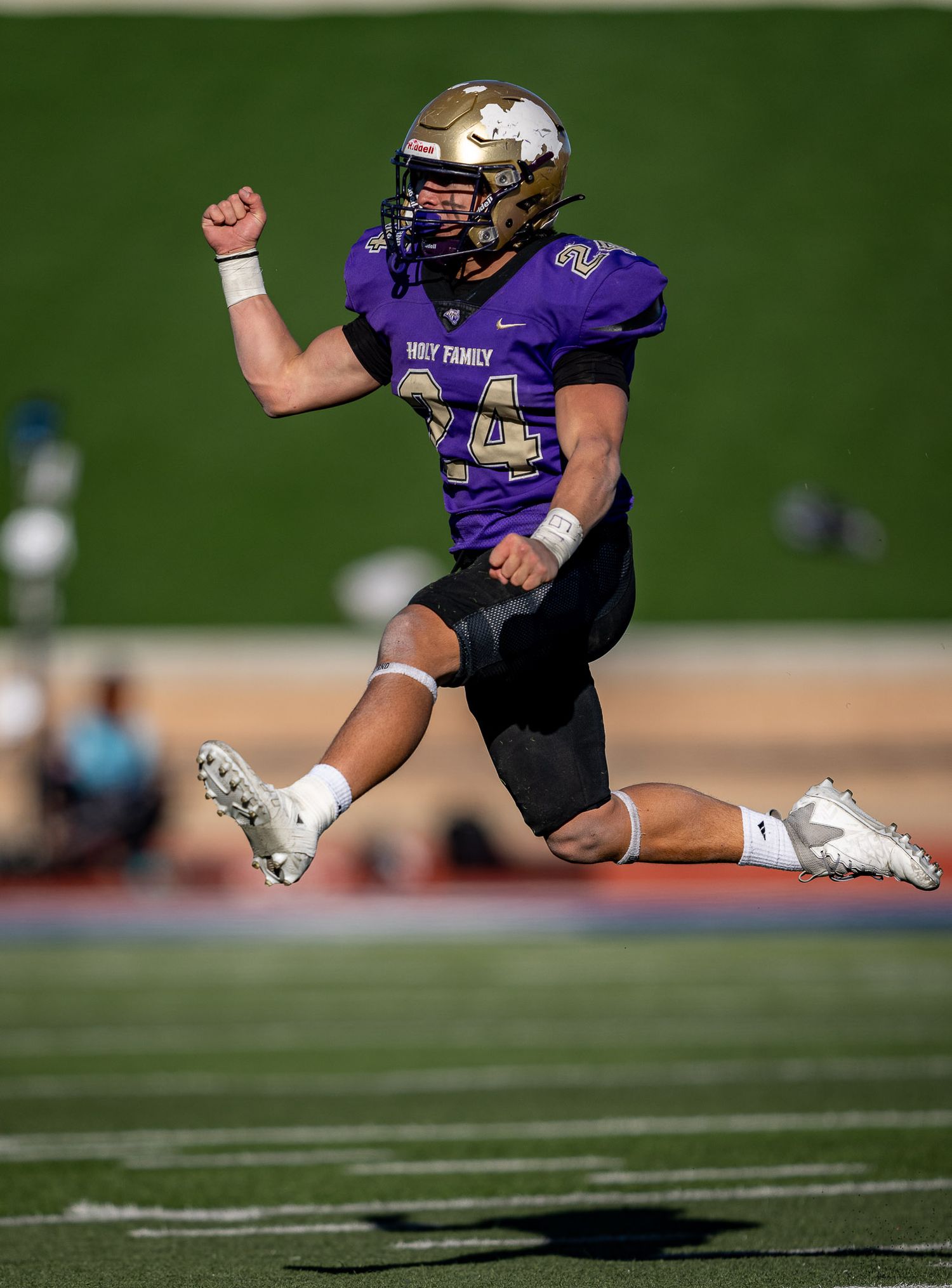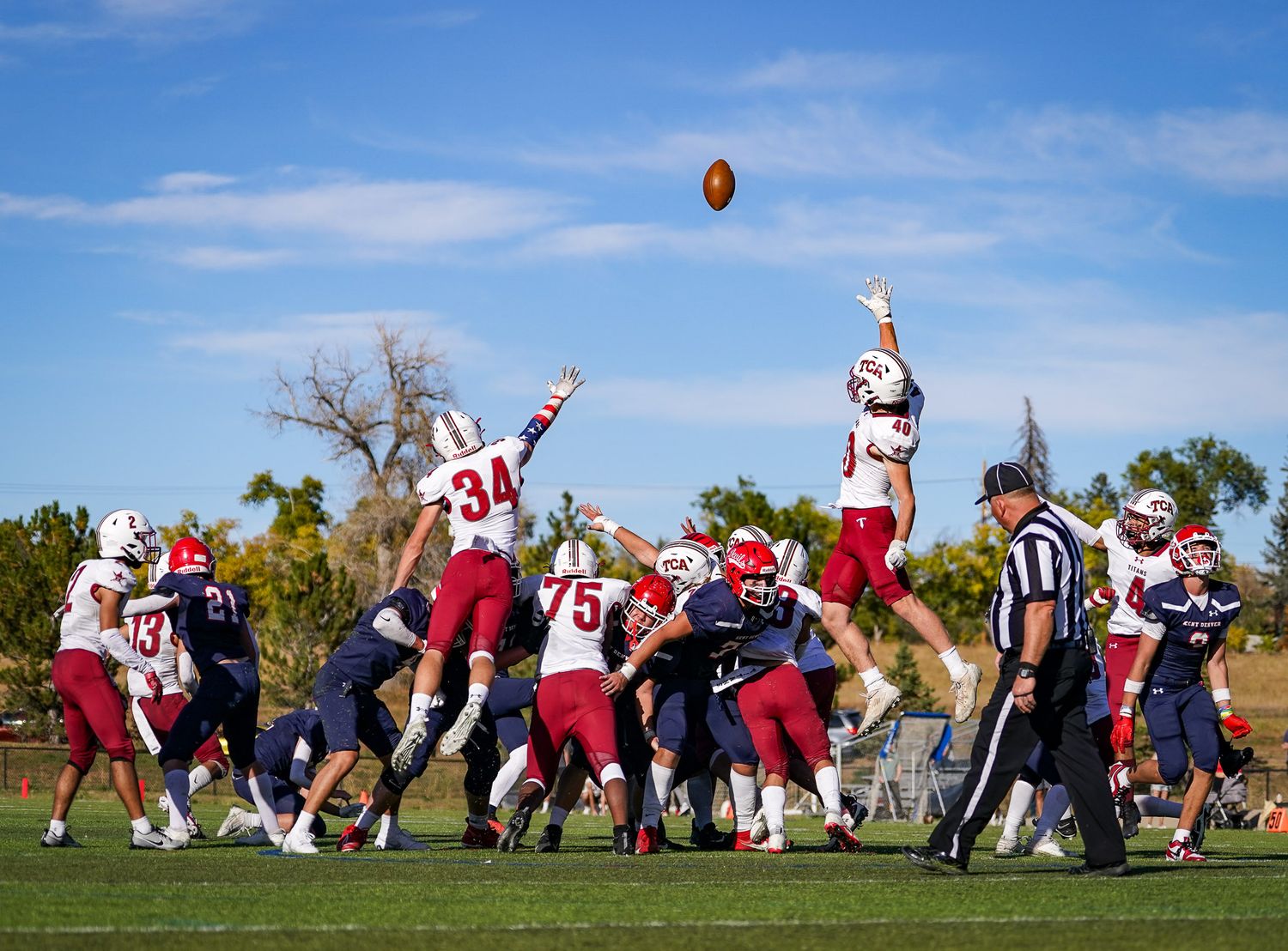
Evidently it takes 10,000 hours to become an expert at something, as such I am FAR from being an expert at photographing football. Over the past few years I have had the opportunity to photograph over 25 high-school football games, and have learned some things that work well, and have made some mistakes that I hope to not repeat in the future. Here are a few tips I have learned over the past few years photographing under the "Friday Night Lights". While this shouldn't be considered a comprehensive guide to photographing high-school football, there should be a few nuggets of information that I hope are found useful.
Gear
Every photographer likes to talk about gear, and I will be the first to admit that I spend way too much time thinking about, researching and purchasing camera gear. The hard-truth I have learned about photographing high-school sports is that because the lighting is so poor, high-end gear is incredibly important for capturing usable images. Sure, decent images can be captured with a DSLR and a kit lens, or even a "nifty-fifty", but to achieve clean, sharp, tight images plan on spending some serious money.
I would recommend that the starting point for wanting to photograph night games is a decent camera and a 70-200mm f/2.8 lens, you will struggle with anything shorter (though it is possible), and your images will be practically unusable with any lenses that are slower. Spending thousands of dollars on camera gear isn't necessary to get good images, but having the right gear makes a HUGE difference, especially as a sports photographer. For example, a crop-sensor camera is fully capable, but a full-frame sensor camera has more dynamic range, thus allowing for shadows and highlights to be adjusted more.
My typical kit includes 2 full-frame camera bodies, capable of shooting 20+ frames per second with a 24-70mm f/2.8 (for pre-game), 70-200mm f/2.8 and a 400mm f/2.8. Day games are significantly easier to photograph, and you can get away with slower lenses. For day games I will sometimes use a 1.4x tele-convertor on my 70-200mm f2.8, which converts it to a 100-280mm f/4 lens, and/or I may use my 200-600mm f5.6-6.3. I use and recommend Sony Cameras and Lenses.
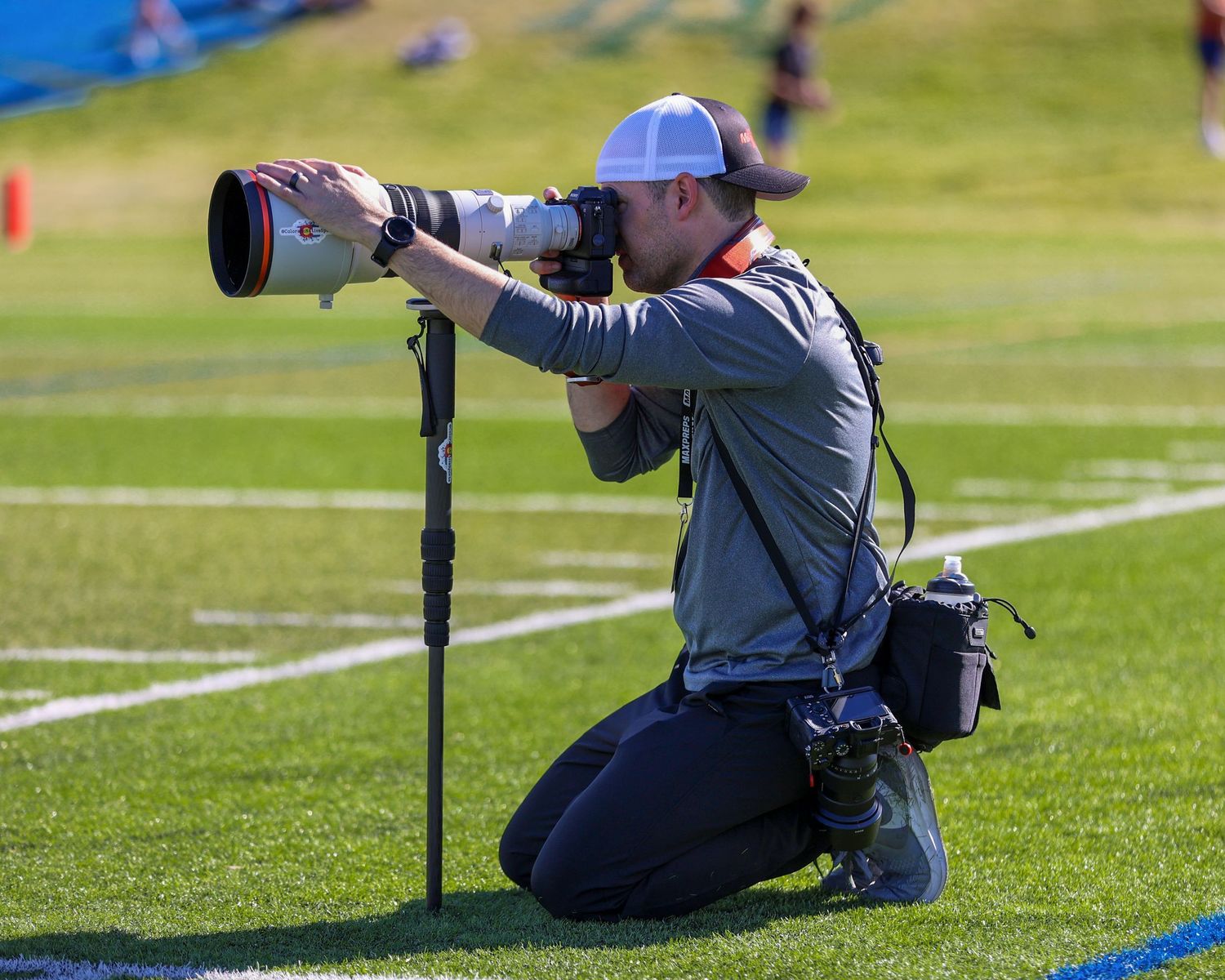
Photo Credit: Tim McDonald - Life Through the Lens Photos
More Gear Tips
Even though a camera and body don't seem to weigh a lot, it's surprising how heavy a camera can feel after carrying it around for 2+ hours straight, therefore a wide, comfortable camera strap is necessary. I use and recommend either the Peak Design Slide or anything from Black Rapid.
Extra batteries are a must, I use a battery grip on both camera bodies and will typically drain at least one of the batteries by the time the 4th quarter starts. Personally, I use and recommend 1st party batteries and grips. Yes, the 3rd party batteries and grips can be significantly cheaper, but why try to save $50 on a battery in a camera that cost thousands of dollars.
I found that using a gear belt where I can carry a water bottle, my tele-convertor, snacks and extra batteries is very convenient. I use and recommend ThinkTank products for gear belt and pouches. ThinkTank is designed by professional photographers for professional photographers.
For telephoto lenses a high-quality monopod is a must (don't use a monopod with a 70-200 lens unless you have some physical limitation). I use and recommend a Leofoto Monopod, which has a good balance of value and quality. When purchasing a monopod, ensure that it can handle the weight of your camera, lens and batteries. I have an older monopod that I use as a backup and it can barely handle my 400 f/2.8.
Camera Settings
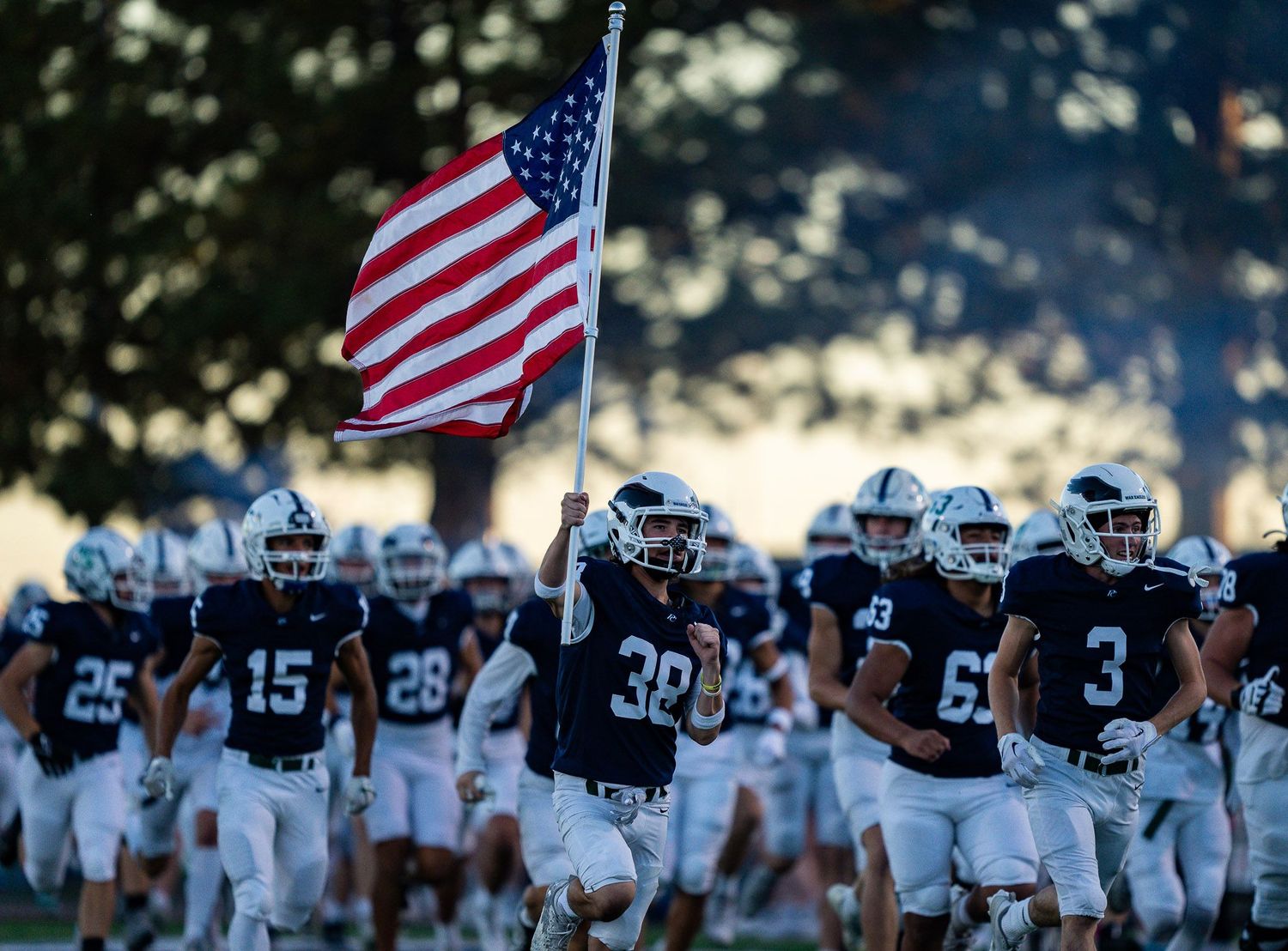
Photographing under the "Friday Night Lights" is TOUGH! I imagine that everyone involved in lighting high-school football stadiums HATE photographers, that's the only thing that makes any sense as to why they are so poorly lit. End zones especially, where a lot of great action happens, are the worst, the teams might as well be playing in a dark cave. Due to these lighting challenges, camera settings are incredibly important.
First, and probably the most important is to get in the habit of checking your camera settings regularly, both before and during the game. I have photographed an entire pre-game with the wrong camera settings and was then scrambling to change the settings prior to kick-off. Not just f-stop, shutter speed and ISO, but also image quality, white balance and frame rate. Also, ensure that your memory card(s) are freshly formatted and empty. Also, keep an eye on settings throughout the game, it is super easy to bump a dial and accidently change your ISO from Auto to 100, then you are wondering why all of your pictures are black.
Second, I will typically start with my camera settings at f/2.8, 1/1250 sec and Auto ISO. I use Auto ISO as the camera does a pretty good job getting the exposure right and will typically set the ISO between 8,000 and 25,600. If the field is especially dark, I may drop my shutter speed down to 1/1000 sec, but I rarely change the f-stop from f/2.8.
Finally, and this is important with any type of photography, know how to operate your camera. Not knowing how to change both simple and complex settings in your camera can mean you miss the shot, especially with sports photography. In addition, it's important to develop muscle memory when it comes to using your camera so that you instinctively know how to change your f-stop, shutter speed or ISO on the fly without having to fumble through menus. If your camera has the capability, program function buttons to handle actions that you will need during the game. For example, on my camera I can designate a button to drop my shutter speed to 1/800 and change the frame-rate to single shot when capturing a player or coach standing still on the sideline.
Pre-Game
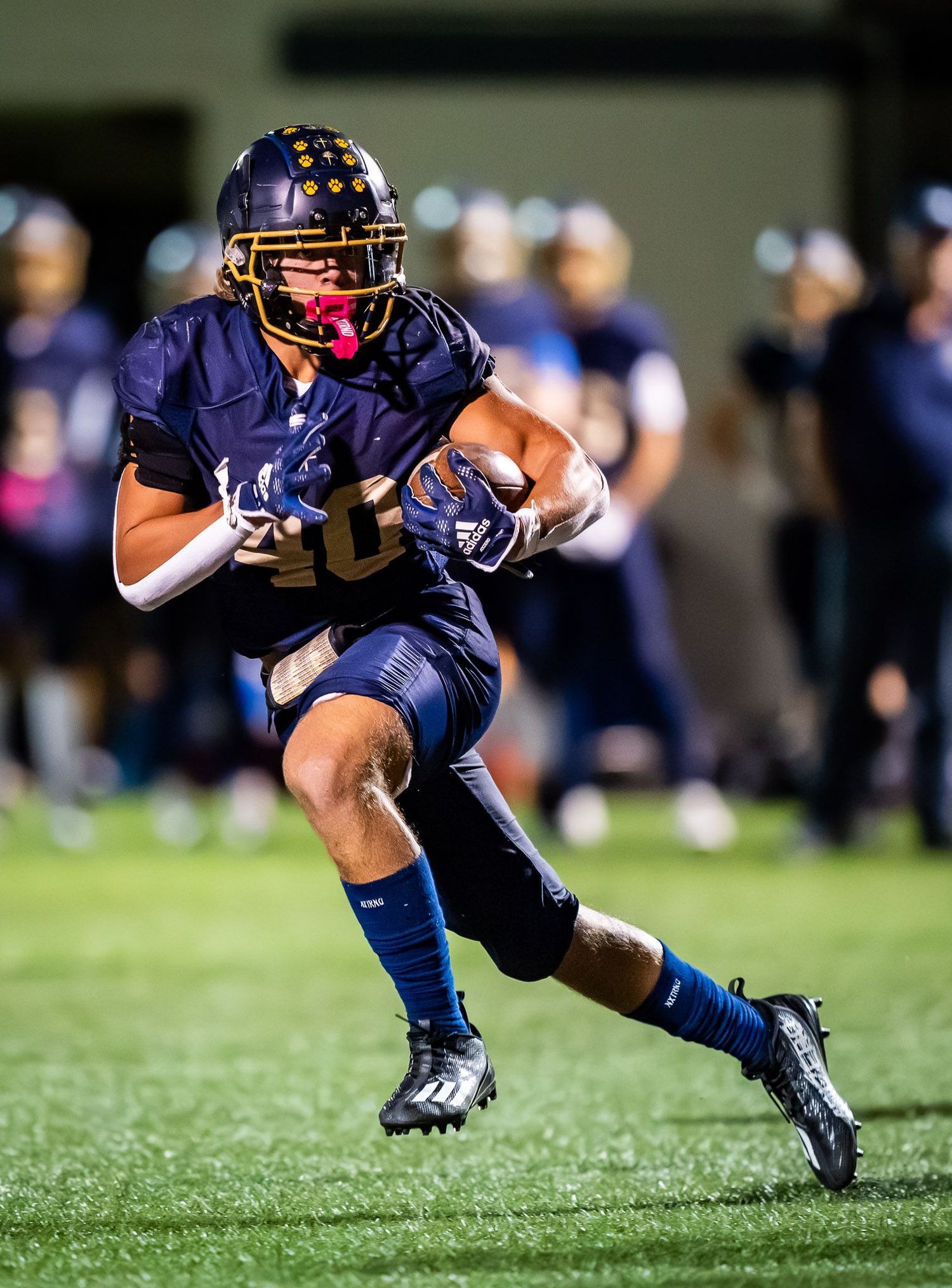
For football games, I like to arrive 45-60 minutes before the game starts. First, I hate to feel rushed for anything, so giving myself an hour before the game starts provides me with plenty of time to be ready for kick-off. This is a perfect time to confirm my camera settings, capture images of the players warming up, and look for any opportunities to get photos that help tell the story. Second, I have found that as long as I stay out of the players and coaches' way, I can walk around the field taking photos that would be impossible during the game. Walking around the field, capturing images of players warming up can produce images that otherwise would not be possible during the game. Just remember to stay out of the way of the players, coaches and support staff. I also make it a point to plan out any other shots that I want to get before the game starts such as the players standing for the anthem, where the players will run out on to the field or any other pre-game activities.
During the Game
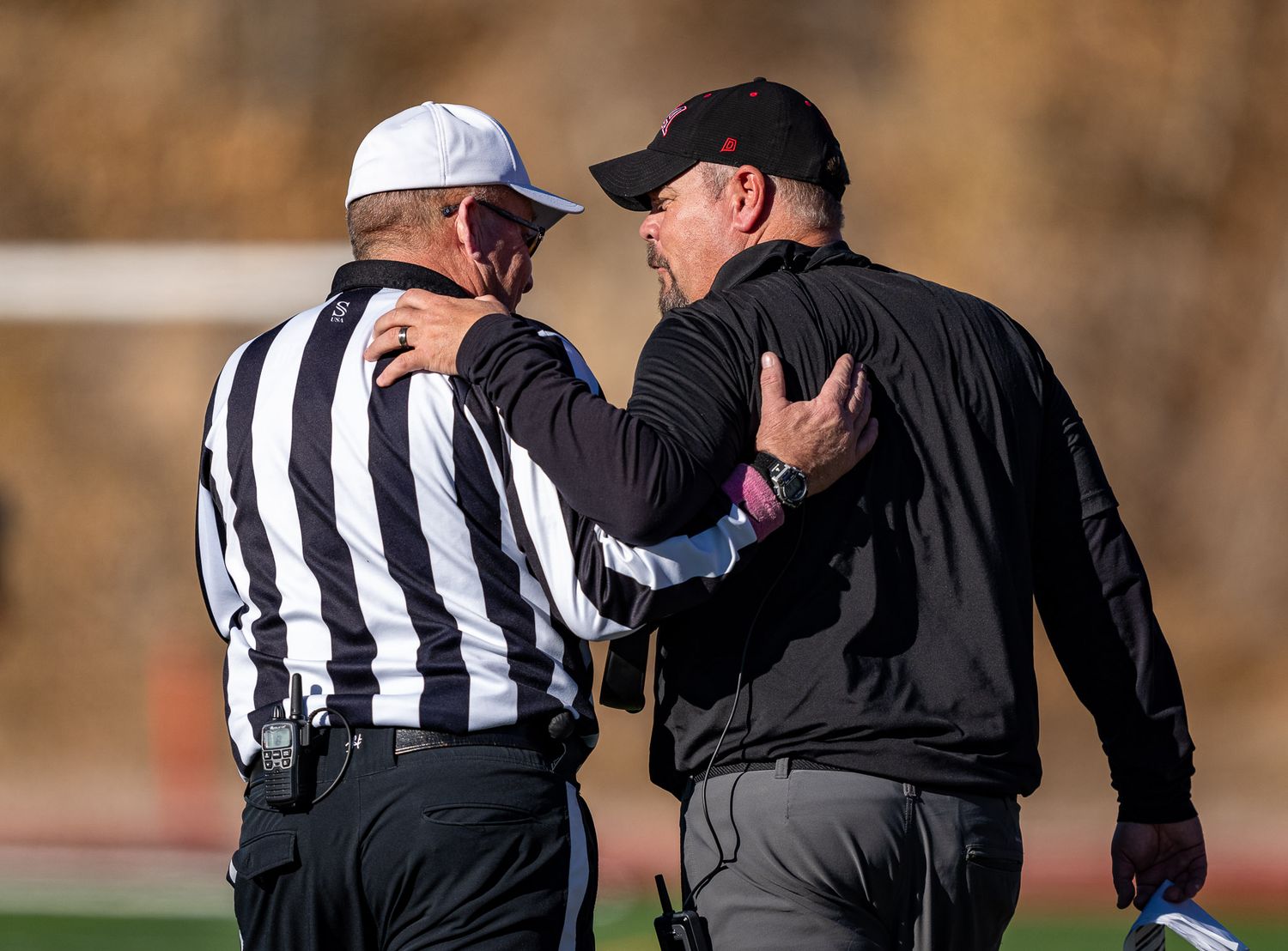
My number one rule when photographing any high-school sport, but espeically football is to PAY ATTENTION!!! Players in your viewfinder may be closer than they appear! Sadly, photographers have been seriously injured by getting hit on the sideline, better to not get the shot then get laid out by a running back (they have pads and a helmet...you don't). Be ready at all times to grab all your gear and get out of the way. When shooting with multiple bodies, I always make sure that everything is at arm's reach if I have to get moving quickly. Also, it's incredibly important not to get in the way of officials or coaches (though it seems that it is their job to get in my way!). While photographers serve an important role in documenting a game, it's way down the list below the players, coaches, officials, support staff, parents, ball-boys, etc.
Be respectful of other photographers and videographers. You wouldn't want someone to set up right in front of you, or walking right in front of your shot, so extend the same courtesy to others. Most of the games that I have photographed have videographers from the local news stations capturing highlights from the game, don't walk in front of them. Treat all photographers, from the teams "mom-tographer" to the student yearbook staff to the pros shooting for media outlets the same.
I try to stay as low as possible when shooting, sometimes even laying on my stomach to get a super-dramatic shot. It is amazing how different a shot can look depending on if the photographer is standing, kneeling or laying down. The lower the camera is, the more dramatic the player looks.
The camera/lens combo being used will help determine where the best place to be positioned as a photographer. While using only a 70-200, I will try and stay 10-15 yards ahead of the line, or I may line up a few yards behind the offense to try and get an image of the quarterback making a pass toward the sideline, or a running back crossing the field. If I am using a 400mm lens, I will try and stay around 30 yards ahead or behind the line, or even camp out behind the end-zone. The difficult part of the end-zone is that one players get beyond the light poles their faces are in shadow.
Don't just focus on the action on the field, look for opportunities to capture images of celebration, frustration and emotion from players on the sideline, coaches, officials and fans. Constantly remind yourself, action AND reaction!
Post-Game
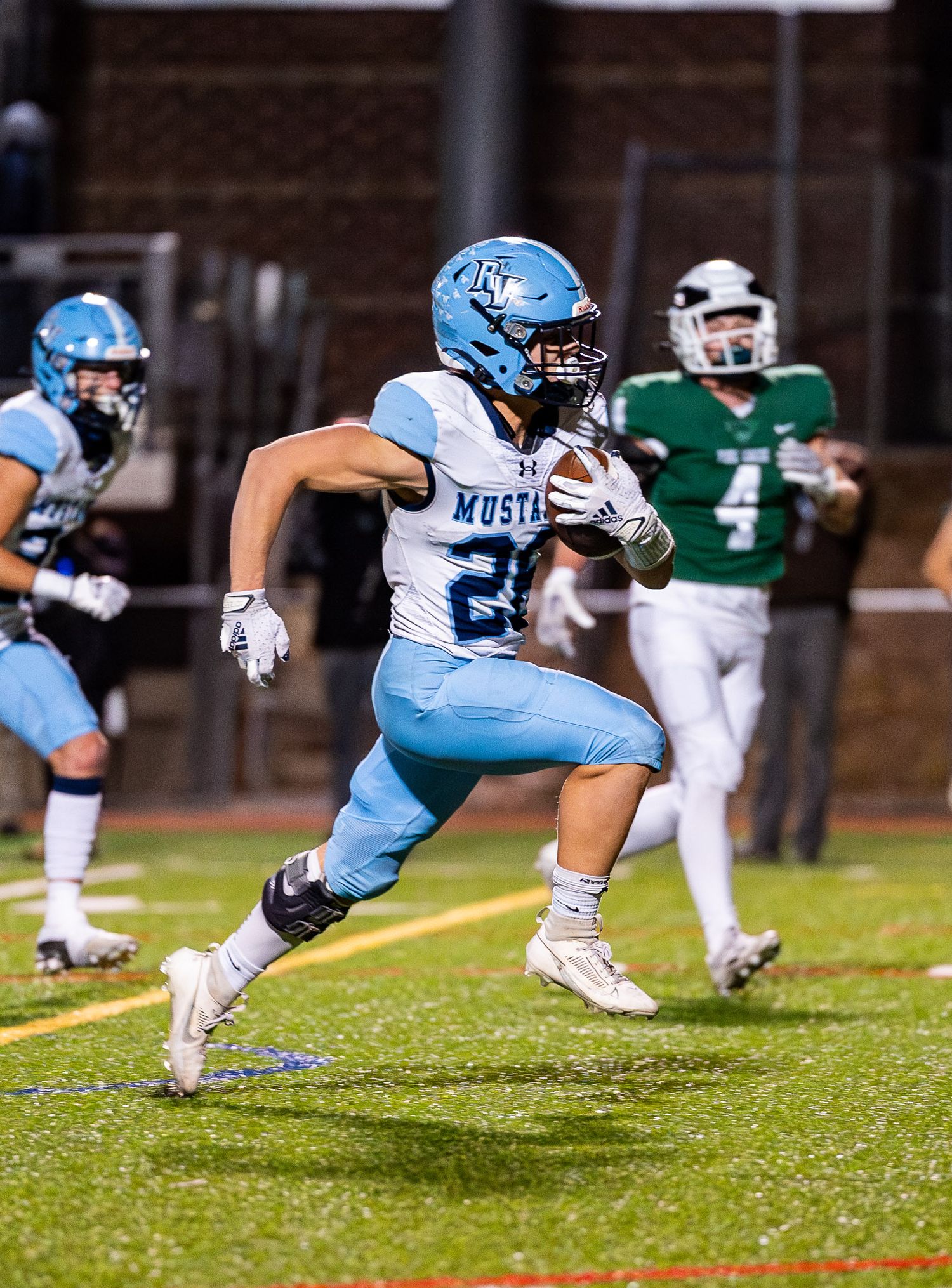
When I started in photography, I would spend hours in the darkroom developing film and making prints. Today I spend hours editing photos on my computer. Thousands of dollars of camera gear are worthless if you can't edit, save and share the images. For a typical football game, I will come away with 1,500-2,000 images and will spend 1-1.5 hours editing for every hour of shooting.
My initial step is to ingest the images to my PC and cull through them using Photo Mechanic. When I am culling, I am looking for images that include faces, the ball and some sort of action. I like images where the player has both legs off the ground if they are running. These images are then loaded into Lightroom where I will crop, edit and denoise as necessary. I always review images to ensure that they are sharp, the primary subject is in focus and that the horizon line is straight (this is one of my biggest pet-peeves). I don't do a ton of editing outside of boosting shadows and bringing down highlights, though I do like the vibrance and contrast sliders. After editing and posting images I get my batteries recharged, memory cards formatted and the camera gear packed up for the next game.
Photographing football can be incredibly challenging due to poor lighting and bad weather. At the same time football is one of my favorite sports to photograph as there is constant action, high-emotions and ample opportunities to capture some incredible images.